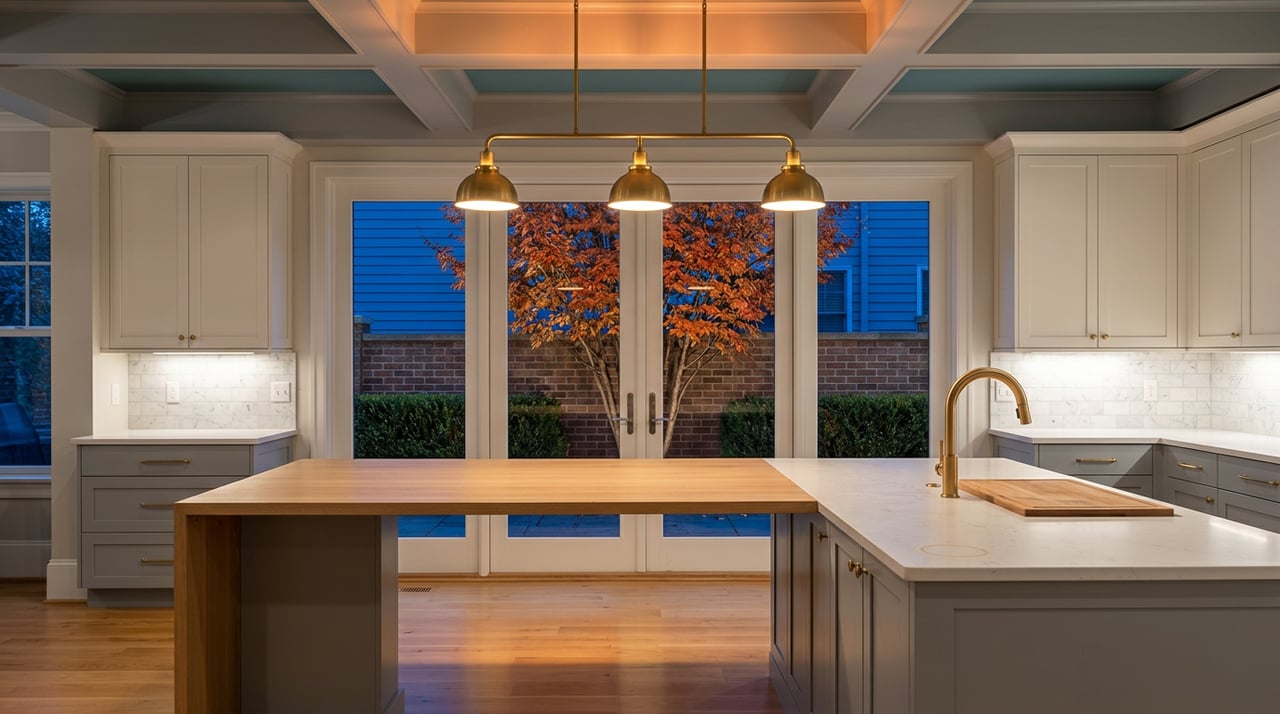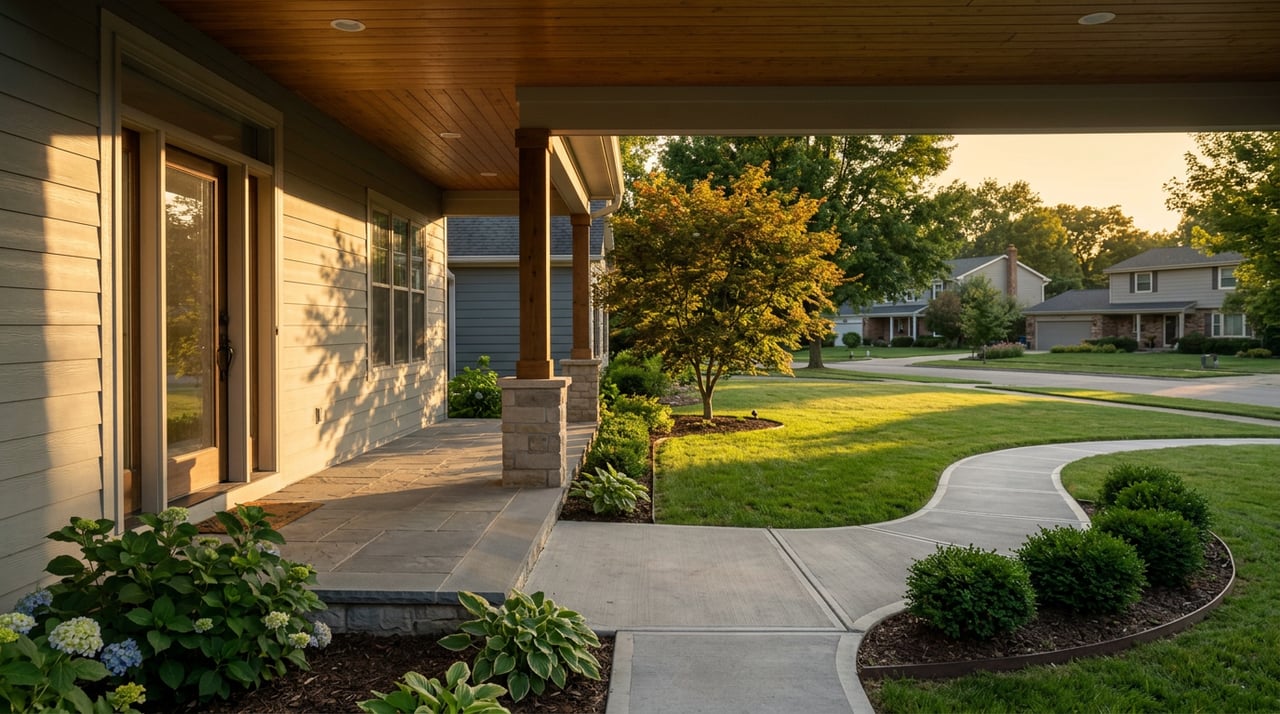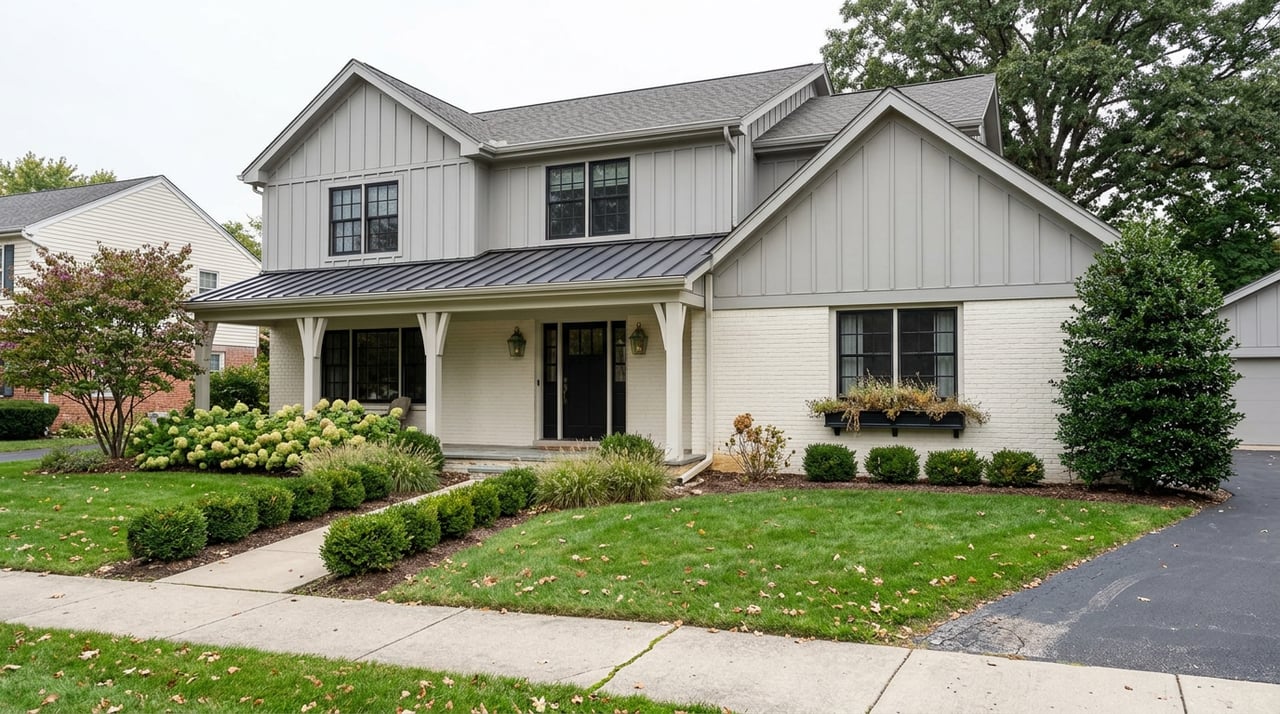
A seller in Falls Church spends four thousand dollars on paint and staging for a 1950s Cape Cod. New hardware in the kitchen, fresh sod, a cleared-out basement. The listing photographs beautifully. Then two offers come in on the same day: one from a family who loves the house exactly as it is, and one from a builder who never sets foot past the front door before making an offer within a few thousand dollars of the first. The builder's number has nothing to do with the paint, the staging, or the basement. It is a bid on the dirt.
That is not a fluke of one listing. It is how a meaningful share of the older housing stock in and around Falls Church is being priced right now, and it explains why two homes that look almost identical from the street can sell for very different reasons and very different numbers.
The Math That Makes Staging Beside the Point
Local demolition crews working in Falls Church typically quote $9,400 to $19,800 to tear down an aging single-family house, depending on size and site access. Set that beside a standard residential lot in the city, where land value alone frequently runs past $800,000. When the cost of removing the structure is a rounding error against the value of the ground it sits on, the structure stops being the product. It becomes packaging.
That is a genuinely different way to price a home than the standard advice most sellers hear, which is to present the house as well as possible so a buyer falls for it. In a meaningful number of Falls Church transactions, the buyer is a builder who is not falling for anything. The buyer is running a spreadsheet on square footage of buildable lot.
How the City Actually Prices the Ground
None of this is guesswork on the city's part. The Falls Church Real Estate Assessment Office values land separately from the structure on it, and land is assessed on a per-square-foot basis with a documented curve: a larger lot carries a lower rate per square foot than a smaller one, because value follows a principle of diminishing returns. The city's own example puts it plainly: an 18,000-square-foot parcel is valued at less per square foot than a 12,400-square-foot parcel nearby, even though the larger lot is worth more in total. You can look up any address in the city's own real property search database and see how land and structure are broken out separately on the record.
There is a timing quirk built into this system too. The assessor values a property based on comparable sales from the twelve months before January 1 of the assessment year, and anything that sells after January 1 doesn't count until the next cycle. That means the assessed value you see on a given property can be describing a market that is already several months stale by the time you read it, which is exactly why an assessment number and a real offer from a builder can land so far apart. The full mechanics are on the city's assessment process page.
Two Neighborhoods Are Living This Right Now
The pattern is not spread evenly. It is concentrated in specific pockets where the original housing stock dates to the 1940s through the 1970s and lot sizes are generous enough to support a much larger house than what's currently standing.
| Where | Neighborhoods seeing active teardown-rebuild activity | Jurisdiction |
|---|---|---|
| Inside the 2.2-square-mile independent city | Greenway Downs, Ellison Heights, Fowler's Addition | City of Falls Church |
| Carries a Falls Church mailing address, sits across the line | Pimmit Hills, Westover, Jefferson Manor, Tara-Leeway Heights, Seven Corners, Lake Barcroft | Fairfax County |
That right-hand column matters more than it looks. Pimmit Hills alone has absorbed a decade of sustained teardown and new-construction activity, and it is not part of the incorporated City of Falls Church at all. Neither is Westover, Jefferson Manor, Seven Corners, or the waterfront lots around Lake Barcroft, which straddles the city-county line. They carry a Falls Church address because of postal and school-boundary conventions, but they answer to Fairfax County's assessor, tax rate, and permitting office, not the city's.
Why the Median You Read Depends on Which Falls Church You Mean
This is where two people can each say "the Falls Church median" and both be telling the truth about entirely different markets. Inside the actual incorporated city, the market runs thin: seven homes sold in March 2026 at a median of $1.2 million, up 19.3% year over year, with homes taking an average of 24 days to sell compared with 15 days the year before. That is a tiny sample size producing a volatile number, exactly what you'd expect when a handful of large-lot teardown sales can swing a monthly median hard in either direction.
Widen the lens to the broader area that shares the Falls Church mailing address, most of it across the county line, and the picture changes. Twenty-nine homes sold there in October 2025 at a median of $910,000, up a comparatively modest 3.4% year over year, with days on market falling from 33 to 27. More transactions, a lower number, a calmer trend line, because that pool includes far more ordinary move-in-ready resales alongside the teardown activity.
Neither number is wrong. They are describing two different footprints that both happen to be called Falls Church.
What This Means If You're Selling an Older Home
If your house sits on a generous lot in one of the neighborhoods above, a full cosmetic refresh may not be the highest-return move before you list. The more useful first step is understanding whether your specific property is more likely to be evaluated as a home or as a buildable lot, because that changes almost everything about pricing strategy, marketing, and even which repairs are worth making. That is exactly the kind of call where architectural perspective earns its keep before a shovel or a paint can shows up, which is the lens Laurie Perl brings to listings like this on our Falls Church team. Before you decide anything, a current valuation grounded in actual land and structure data, not a zip-code-wide average, is the place to start. You can request one through our sellers page or start with a home valuation.
What This Means If You're Buying
If you are comparing Falls Church listings on price per square foot, understand that the number is being pulled in two directions at once by lot value and structure value, and a spreadsheet comparison across addresses can mislead you unless you separate the two. A 1,200-square-foot mid-century home and a 4,500-square-foot new build can sit on the same block, and their price difference has almost nothing to do with the quality of construction and everything to do with when the lot was rebuilt. Before you make an offer, it is worth confirming which jurisdiction the address actually falls under, since that determines the tax rate, the school system, and which assessment office holds the record.
A Few Questions We Hear Often
Does this mean I shouldn't renovate an older Falls Church home? Not necessarily. It means the renovate-versus-rebuild decision should start with an honest look at your lot's underlying value against the cost of the work, not with a general assumption that updating the kitchen always pays for itself. That calculation looks different on a quarter-acre lot in Greenway Downs than it does on a smaller in-city parcel.
How do I find out which side of the line my address is on? Don't rely on the mailing address alone. The city's real property search tool will confirm whether a given parcel is inside the incorporated City of Falls Church, and Fairfax County's own records will confirm the reverse for anything outside it.
Does the land-value effect apply to condos too? Generally no. Condominium value is tied to the shared building and its improvements, not an individually buildable lot, so the teardown economics described here mostly affect single-family homes on their own parcels.
Whichever side of that line your next move lands on, understanding what's actually being priced, the ground or the structure on it, changes how you should approach either side of the transaction. If you want a read on a specific Falls Church address before you list it or write an offer on it, The Pearl Team can walk through the numbers with you and tell you which Falls Church you're really standing in.