Ever wonder why daily life in Reston feels different from many other suburbs in Northern Virginia? It is not just the trees, the lakes, or the convenience. Reston was planned so that trails, village centers, and housing clusters work together, and that design still shapes how you move through the day. If you are thinking about living in Reston, this guide will help you understand how the community’s layout affects errands, recreation, commuting, and the overall feel of home. Let’s dive in.
Reston was planned around connection
Reston began as a planned new town after Robert E. Simon purchased the former Bowman Farm in 1961. Fairfax County says the community was designed around five villages, each with its own village center, with lower-density residential areas organized around a central town center and neighborhood-serving retail and social spaces.
That original framework still matters today. Fairfax County’s current plan says the existing village centers, including Lake Anne, Hunters Woods, South Lakes, and North Point, are meant to remain focal points for nearby neighborhoods. In practice, that means Reston is not built around one long commercial strip. It is built around local centers and the connections between them.
Trails support everyday routines
One of the clearest ways you feel Reston’s design is through its trail system. Reston Association says it maintains 55 miles of paved pathways and natural-surface trails that connect neighborhoods, facilities, schools, and shopping areas.
That matters because trails here are not only for weekend recreation. They can also be part of how you get to a plaza, reach a neighborhood amenity, or fit in a walk or bike ride between other parts of your day. Reston Museum notes that Lake Anne Plaza can be reached by the Green or Blue trail, which helps show how these paths connect daily destinations.
Reston Association also maintains more than 1,300 acres of open space, including four lakes, three ponds, streams, wetlands, forests, and meadows. The 72-acre Walker Nature Center, with its one-mile loop trail, adds another layer to that experience.
For many residents, that means outdoor time is built into ordinary life. Instead of driving everywhere, you may find yourself walking to a local center, jogging on a paved path, or using nearby open space as part of your normal routine.
Recreation is woven into the neighborhood
Reston’s amenity network extends beyond trails. Reston Association lists 15 pools and 54 tennis and pickleball courts across the community.
That range gives you options for after-work exercise, weekend plans, and casual meetups close to home. It also reinforces the idea that Reston’s outdoor lifestyle is part of the neighborhood fabric, not a separate destination you have to plan your whole day around.
Village centers shape errands and gathering
Fairfax County’s plan describes Reston’s village centers as neighborhood gathering places, not just shopping areas. The plan calls for public plazas, pedestrian comfort, regular bus service, and a mix of uses that can include restaurants, retail, local services, professional offices, and community space.
That planning goal has a real effect on day-to-day life. Depending on where you live, your nearest village center may be the place where you pick up groceries, grab coffee, meet neighbors, or attend a local event. In Reston, errands and social life often overlap in a way that feels more intentional than in a typical suburban pattern.
Lake Anne offers a historic local feel
Lake Anne is the clearest expression of Reston’s original concept. Fairfax County describes it as the first village center, opened in 1965 and planned at a pedestrian scale around residences, offices, retail, lakes, and plazas. It is also designated as a historic district because of its significance to Reston’s 1960s new-town planning.
Today, Lake Anne still carries that intimate, local rhythm. The Reston Museum describes it as Reston’s historic village center and uses it for walking tours, heritage programming, public-art events, and community gatherings. The Lake Anne Plaza area is also presented as a waterfront gathering place, which adds to its distinct identity.
If you spend time near Lake Anne, the experience can feel more relaxed and close-knit. It is a place where the setting itself plays a big role in daily life.
Reston Town Center brings a larger-scale mix
Reston Town Center offers a different pace. Its official site says it includes more than 50 retailers, 35 restaurants, and a multi-screen cinema, along with concerts and family programming on its events calendar.
WMATA says the Reston Town Center station is the first of the six newer Silver Line stations beyond Wiehle-Reston East. It is also a short walk to dining, shopping, and entertainment, with bike racks and bike lockers available, though no commuter parking.
That combination gives Reston Town Center a more urban-style feel. If Lake Anne feels rooted in neighborhood history and waterfront character, Reston Town Center feels broader, busier, and more event-driven.
Your experience depends on your village
One important thing to know is that not every home in Reston has the same relationship to the same amenities. Fairfax County’s planning framework treats village centers as neighborhood-oriented, and the day-to-day experience can vary depending on which village or cluster you live in.
That is part of what makes Reston interesting. Two buyers can both say they live in Reston but have somewhat different routines based on their nearest center, trail access, and preferred destinations.
For you as a buyer, this means it helps to look beyond the community name alone. The details of your specific location inside Reston can shape how often you walk to a center, how you use the trails, and whether your lifestyle feels more centered on a quiet local plaza or a larger mixed-use destination.
Housing clusters create smaller neighborhoods
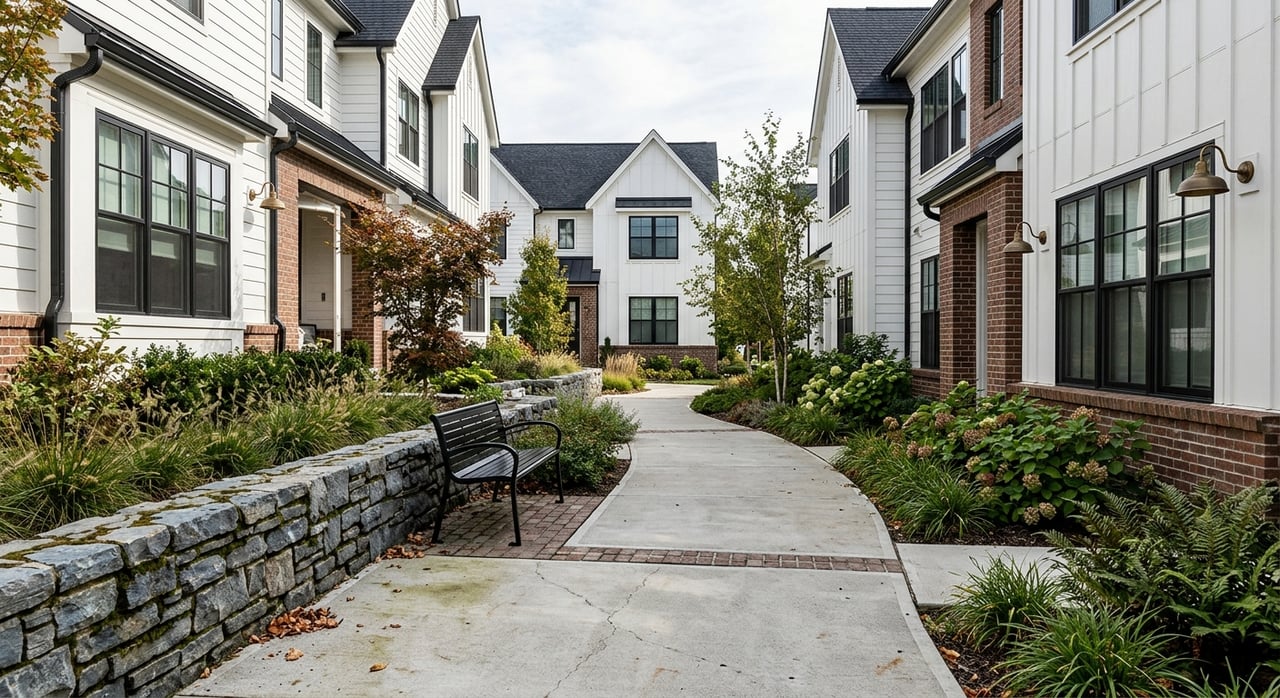
Reston’s housing pattern was designed to feel connected but not uniform. Reston Association says the community includes more than 160 sub-associations, each with its own contacts, while design guidelines and the Design Review Board govern exterior changes, common areas, commercial spaces, and other covenanted land.
Fairfax County’s planning documents also describe a wide range of housing types in Reston, including high-rise apartments, garden apartments, townhouses, and single-family detached and semi-detached homes. Density generally tapers from the center toward the edge.
This structure helps explain why Reston often feels like a collection of smaller neighborhoods tied together by trails and centers. Instead of one continuous commercial corridor, you get clusters of homes with their own identity, linked by shared infrastructure and amenities.
Transit extends Reston’s reach
Trails and village centers are a big part of local life, but transit also shapes how Reston functions. Fairfax Connector’s RIBS 2 route provides east-west service between Herndon Metro Station and Reston Town Center Transit Station along Sunset Hills, South Lakes, and Glade, while also serving the Reston Community Center and the Wiehle-Reston East Metro area.
Fairfax County says the Reston Transit Station Areas were created in 2014 and updated in 2023 to support economic and physical growth while preserving walkability, sustainability, innovation, and inclusivity. That planning work reinforces Reston’s long-standing pattern of connected nodes rather than isolated subdivisions.
For residents, that means the community’s centers are not only local destinations. They are also part of a broader network that can support commuting, dining, shopping, and regional access.
Why this matters when you buy in Reston
If you are searching for a home in Reston, the community’s structure can affect more than your address. It can shape how you spend your mornings, where you run errands, how often you use outdoor space, and what kind of neighborhood rhythm feels most natural to you.
A home near trails may support a more walkable routine. A home near a village center may make local errands and casual outings easier. A location with strong access to Metro or Connector service may better fit your commute or travel habits.
That is why buying in Reston often calls for a more detailed conversation than simply choosing a zip code or a home style. The right fit usually comes from matching your daily habits with the part of Reston that supports them best.
If you are weighing where to focus in Reston or want help comparing one area with another, The Pearl Team can help you look at the details that matter most to your routine, your goals, and the way you want to live.
FAQs
How do Reston trails affect daily life?
- Reston Association maintains 55 miles of paved pathways and natural-surface trails that connect neighborhoods, schools, shopping, and facilities, which helps make walking, jogging, and biking part of everyday routines.
What are Reston village centers designed for?
- Fairfax County says Reston’s village centers are intended to serve as neighborhood focal points with local-serving retail, restaurants, professional offices, public gathering spaces, and pedestrian-friendly connections.
What is special about Lake Anne in Reston?
- Lake Anne was Reston’s first village center, opened in 1965, and Fairfax County identifies it as a historic district planned at a pedestrian scale around residences, offices, retail, lakes, and plazas.
How is Reston Town Center different from Lake Anne?
- Reston Town Center is a larger, more urban-style destination with more than 50 retailers, 35 restaurants, a cinema, and regular events, while Lake Anne has a more historic, waterfront, neighborhood-centered feel.
Do all Reston homes have the same walkability?
- No. Reston’s centers are neighborhood-oriented, so your day-to-day access to trails, plazas, shops, and transit depends a lot on which village or housing cluster you live in.
How does transit fit into life in Reston?
- Transit supports Reston’s connected layout through Metro access and local bus routes like Fairfax Connector’s RIBS 2, which links key parts of the community including Reston Town Center, South Lakes, and the Wiehle-Reston East area.